Disability Benefits in 2026: SSI/SSDI Application Guide
Advertisements
Understanding Disability Benefits in 2026: A Step-by-Step Guide to Applying for SSI/SSDI is crucial for those seeking financial assistance due to a disability. This comprehensive guide provides a step-by-step approach to applying for Supplemental Security Income (SSI) and Social Security Disability Insurance (SSDI).
We cover eligibility criteria, the application process, required documentation, and what to expect during the evaluation. Stay informed about the latest updates and prepare your application effectively for the coming year.
Our aim is to simplify the complex process, offering clear, actionable advice to help you navigate the system with confidence and secure the benefits you deserve.
Navigating the complex landscape of disability benefits can be a daunting task, especially with the ever-evolving regulations and requirements. As we approach 2026, understanding the precise steps for applying for Supplemental Security Income (SSI) and Social Security Disability Insurance (SSDI) becomes paramount for individuals facing disabling conditions.
This guide aims to demystify the application process, providing a clear, step-by-step roadmap to help you secure the financial support you need. We will delve into the intricacies of eligibility, necessary documentation, and key considerations for a successful claim, ensuring you are well-prepared for Disability Benefits in 2026: A Step-by-Step Guide to Applying for SSI/SSDI.
Staying informed about the latest guidelines from the Social Security Administration (SSA) is not just helpful, it’s essential. This article serves as your go-to resource for current, accurate information, empowering you to approach your application with confidence and clarity.
Understanding SSI and SSDI: Key Differences for 2026 Applicants
Before initiating any application, it is crucial to distinguish between Supplemental Security Income (SSI) and Social Security Disability Insurance (SSDI). While both programs provide assistance to individuals with disabilities, their eligibility requirements and funding sources differ significantly, impacting your approach to Disability Benefits in 2026.
SSI is a needs-based program for individuals with limited income and resources, regardless of their work history, while SSDI is an insurance program funded by payroll taxes, requiring a sufficient work history to qualify. Grasping these fundamental differences is the first critical step.
Knowing which program best suits your situation can streamline your application and increase your chances of approval. This foundational understanding sets the stage for successfully navigating the 2026 application process.
SSI: Needs-Based Assistance
Supplemental Security Income (SSI) is designed to provide financial aid to disabled adults and children who have limited income and resources. This program does not depend on your work history or that of your family members.
Eligibility for SSI is determined by strict income and asset limits set by the federal government, which may see adjustments in 2026. Applicants must meet these financial thresholds in addition to the medical criteria for disability.
Understanding these financial limitations is vital when preparing your application for Disability Benefits in 2026, as even minor discrepancies can affect your eligibility.
SSDI: Work-Credit Dependent
Social Security Disability Insurance (SSDI) is available to individuals who have worked long enough and recently enough, paying Social Security taxes on their earnings. Your eligibility is based on accumulated work credits.
The number of work credits required varies depending on your age when you become disabled. Generally, you need 40 credits, with 20 earned in the last 10 years, though younger individuals may qualify with fewer credits.
For those seeking Disability Benefits in 2026, it is essential to review your Social Security earnings record to confirm you have the necessary work credits before applying for SSDI.
Initial Steps: Preparing Your Application for Disability Benefits in 2026
The initial phase of applying for disability benefits involves meticulous preparation and gathering essential information. This groundwork is crucial for building a strong case and avoiding common pitfalls that can delay or derail your application for Disability Benefits in 2026.
Beginning with a comprehensive understanding of the required documentation and the application portal can significantly ease the process. Taking the time to organize everything beforehand will prove invaluable.
This proactive approach ensures that when you submit your application, all necessary components are in place, presenting a clear and coherent picture of your disabling condition and its impact.
Gathering Essential Documentation
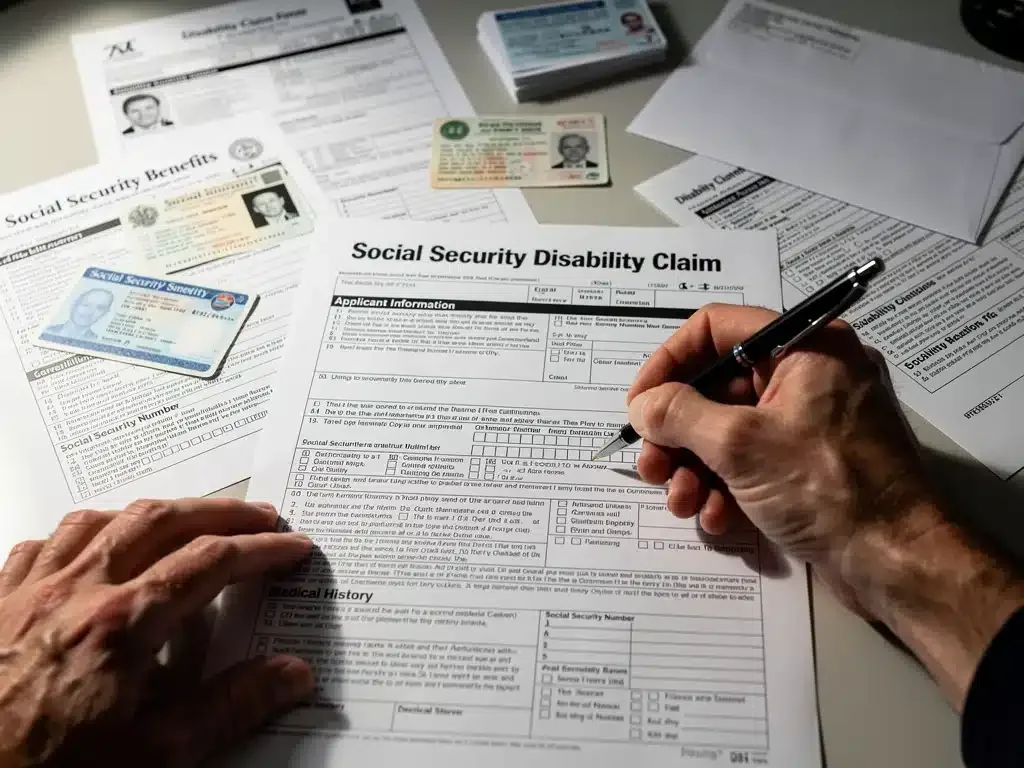
A successful application hinges on thorough documentation. This includes medical records, employment history, and personal information, which collectively paint a complete picture of your situation.
Start by compiling all relevant medical evidence, such as doctor’s reports, hospital records, lab results, and imaging scans, detailing your diagnosis, treatment, and prognosis. The more comprehensive your medical file, the stronger your claim for Disability Benefits in 2026.
Additionally, gather information about your work history, including dates of employment, job duties, and earnings, as well as personal identification documents like your Social Security card and birth certificate. These documents are indispensable for your application.
- Medical records: Diagnoses, treatment plans, lab results, imaging.
- Employment history: Dates, job descriptions, earnings, and work limitations.
- Personal identification: Social Security card, birth certificate, proof of citizenship.
- Financial records (for SSI): Bank statements, asset information, income details.
Online Application Portal and Paper Forms
The Social Security Administration (SSA) offers multiple avenues for application, with the online portal being the most convenient for many. This digital platform allows you to submit your information securely and track your application’s progress.
While the online application is often preferred, paper forms are also available for those who prefer to complete their application manually or require assistance. It’s important to choose the method that best suits your comfort level and accessibility needs.
Regardless of the method, ensure all fields are accurately and completely filled out. Incomplete applications for Disability Benefits in 2026 are frequently denied, necessitating a fresh start and further delays.
Medical Evidence: The Cornerstone of Your Disability Benefits in 2026 Claim
The medical evidence you provide is arguably the most critical component of your application for disability benefits. It serves as the primary basis for the SSA to determine if your condition meets their stringent definition of disability.
Comprehensive and consistent medical records from qualified professionals are essential to demonstrate the severity and duration of your impairment. Without strong medical support, even genuinely disabling conditions can be overlooked.
Investing time in ensuring your medical documentation is complete, accurate, and up-to-date will significantly strengthen your claim for Disability Benefits in 2026.
Doctor’s Reports and Treatment History
Detailed reports from your treating physicians are paramount. These reports should include your diagnosis, prognosis, symptoms, functional limitations, and how your condition affects your ability to perform daily activities and work.
It is crucial that your doctors explicitly document the severity and permanence of your condition, as well as any treatments you have undergone and their effectiveness. Consistent medical care demonstrates the ongoing nature of your impairment.
Ensure your medical records reflect a comprehensive treatment history, including all medications, therapies, and surgeries, as this provides a clear timeline of your efforts to manage your condition for Disability Benefits in 2026.
Objective Medical Tests and Imaging
Objective medical evidence, such as lab results, X-rays, MRIs, CT scans, and other diagnostic tests, provides irrefutable proof of your medical condition. These tests corroborate your doctor’s observations and your subjective symptoms.
These objective findings are particularly important as they offer concrete, measurable data that the SSA relies upon during their evaluation process. They help to remove any ambiguity regarding the existence and severity of your impairment.
Always include copies of all relevant test results with your application. These pieces of evidence are vital for substantiating your claim for Disability Benefits in 2026 and proving the medical necessity of your application.
The Application Process: Step-by-Step for SSI/SSDI in 2026
Once you have gathered all necessary documentation, the actual application process begins. This involves several critical steps, from submitting your initial application to attending potential interviews or examinations, all contributing to your pursuit of Disability Benefits in 2026.
Understanding each stage will help you anticipate what’s next and respond promptly to any requests from the Social Security Administration. Being proactive and organized throughout this process is key to a smoother experience.
Each step is designed to gather more information about your disability and its impact, leading to an informed decision by the SSA regarding your eligibility.
Submitting Your Initial Application
The first official step is submitting your completed application, either online, by mail, or in person at a local SSA office. Ensure all sections are filled out accurately and completely, as omissions can cause delays.
Upon submission, the SSA will review your non-medical eligibility (work credits for SSDI, income/resources for SSI) before forwarding your case to the Disability Determination Services (DDS) for medical evaluation.
Keep a copy of everything you submit, including the date of submission, as this will be important for tracking your application for Disability Benefits in 2026.
Medical Evaluation by Disability Determination Services (DDS)
The DDS is responsible for making the initial medical determination of disability. They will review all your submitted medical evidence and may contact your doctors for additional information.
In some cases, the DDS may schedule a Consultative Examination (CE) with an independent doctor to assess your condition. It is crucial to attend any scheduled CEs, as failure to do so can lead to a denial.
The DDS evaluates whether your condition meets the SSA’s definition of disability, which means you cannot engage in any substantial gainful activity due to a medically determinable physical or mental impairment that has lasted or is expected to last for at least 12 months, or result in death. This is the core assessment for Disability Benefits in 2026.
Understanding Denials and the Appeals Process for Disability Benefits in 2026
It is a common reality that many initial applications for disability benefits are denied. This can be disheartening, but it is important to remember that a denial is often not the final word on your claim for Disability Benefits in 2026.
The Social Security Administration has a multi-tiered appeals process designed to give applicants several opportunities to present their case. Understanding this process is critical for anyone facing an initial denial.
Do not give up after a denial; instead, prepare to navigate the appeals system with renewed determination and, if possible, professional assistance.

Reconsideration and Hearing by an Administrative Law Judge (ALJ)
The first level of appeal is Reconsideration, where someone who was not involved in the initial decision reviews your case. You can submit new medical evidence at this stage.
If your application is denied again at Reconsideration, the next step is a hearing before an Administrative Law Judge (ALJ). This is often the most effective stage for many applicants, as you can present your case in person, often with an attorney or advocate, and introduce new evidence and testimony.
An ALJ hearing provides a more personal and often more thorough review of your case, making it a critical point in the pursuit of Disability Benefits in 2026.
- Reconsideration: A complete review of your claim by a new examiner, with new evidence.
- ALJ Hearing: A formal hearing before an Administrative Law Judge, allowing for testimony and new evidence.
- Appeals Council Review: A review by the Appeals Council if you disagree with the ALJ’s decision.
- Federal Court Review: The final stage, where you can file a lawsuit in federal district court.
The Importance of Legal Representation
While not mandatory, having legal representation, such as a disability attorney or advocate, significantly increases your chances of approval, especially during the appeals process. These professionals understand the nuances of disability law.
An attorney can help gather additional medical evidence, prepare you for hearings, cross-examine witnesses, and argue your case effectively before an ALJ. Their expertise is invaluable in presenting a compelling argument.
Seeking legal counsel early in the appeals process can make a substantial difference in the outcome of your claim for Disability Benefits in 2026, providing peace of mind and expert guidance.
Maximizing Your Chances for Approval for Disability Benefits in 2026
Beyond simply submitting an application, there are proactive steps you can take to significantly improve your chances of receiving approval for disability benefits. These strategies focus on presenting a clear, consistent, and compelling case to the Social Security Administration.
From maintaining diligent medical care to accurately describing your daily limitations, every detail contributes to the overall strength of your claim. Maximizing your chances involves strategic planning and meticulous execution.
By following these best practices, you can effectively communicate the severity of your condition and its impact, thereby increasing your likelihood of securing Disability Benefits in 2026.
Consistent Medical Treatment and Compliance
One of the strongest indicators of a genuine and severe disability is consistent medical treatment. Regularly seeing your doctors and following their prescribed treatment plans demonstrates the ongoing nature and impact of your condition.
Non-compliance with recommended treatments, without a valid reason, can lead the SSA to question the severity of your impairment. Always adhere to your doctor’s advice and document any reasons for deviation.
Maintaining a continuous record of medical care and treatment is vital evidence that supports your claim for Disability Benefits in 2026, showing a sustained effort to manage your health.
Detailed Description of Daily Limitations
When applying, it’s not enough to simply state your diagnosis; you must thoroughly explain how your condition impacts your daily life and ability to work. Be specific about your functional limitations.
Describe what you can no longer do, or what you can do only with significant difficulty, due to your disability. This includes activities like walking, lifting, sitting, standing, concentrating, and interacting with others.
Providing a vivid and detailed account of your daily struggles helps the SSA understand the true extent of your impairment and its implications for your eligibility for Disability Benefits in 2026.
Changes and Updates Affecting Disability Benefits in 2026
The landscape of social security benefits is not static; it undergoes periodic adjustments and updates. Staying informed about potential changes affecting Disability Benefits in 2026 is crucial for all applicants and beneficiaries.
These changes can range from cost-of-living adjustments (COLAs) to modifications in eligibility criteria or the application process itself. Being aware of these developments allows for better preparation and adaptation.
Monitoring official announcements from the Social Security Administration ensures you are working with the most current information, which can significantly influence your application strategy.
Potential Cost-of-Living Adjustments (COLAs)
Each year, the Social Security Administration typically announces a Cost-of-Living Adjustment (COLA) to Social Security and SSI benefits. This adjustment is designed to help benefits keep pace with inflation.
While the exact COLA for 2026 will be announced later, it is an important factor for beneficiaries to consider in their financial planning. These adjustments directly impact the monthly benefit amount received.
Applicants for Disability Benefits in 2026 should be aware of these potential increases, as they affect the overall value and purchasing power of the benefits received.
Regulatory and Policy Updates
Beyond COLAs, the SSA may introduce regulatory or policy changes that could impact eligibility requirements, the definition of disability, or the application process itself. These updates can be subtle but significant.
It is advisable to regularly check the official SSA website for any proposed or enacted changes that could affect your application for Disability Benefits in 2026. Legal and advocacy groups also often provide summaries of such updates.
Staying abreast of these developments ensures that your application aligns with the most current guidelines and maximizes your chances of a favorable outcome.
Resources and Support for Disability Benefits in 2026 Applicants
Applying for disability benefits can be an overwhelming process, but you don’t have to navigate it alone. A wealth of resources and support systems are available to assist applicants at every stage of their journey for Disability Benefits in 2026.
From official government channels to non-profit organizations and legal aid, these resources can provide invaluable guidance, information, and practical assistance. Leveraging these supports can significantly ease the burden.
Knowing where to turn for help can make a substantial difference in successfully securing the benefits you need and deserve.
Social Security Administration (SSA) Resources
The official Social Security Administration website (SSA.gov) is the primary source for accurate and up-to-date information on SSI and SSDI. It offers detailed guides, online application portals, and contact information.
You can also visit local SSA offices for in-person assistance, where staff can answer questions and help with the application process. The SSA’s toll-free helpline is another direct channel for support.
Utilizing these direct resources from the SSA ensures you are receiving information directly from the source, which is critical when applying for Disability Benefits in 2026.
Advocacy Groups and Legal Aid
Numerous non-profit organizations and advocacy groups specialize in assisting individuals with disabilities through the benefits application process. These groups often provide free or low-cost advice and representation.
Legal aid services and disability law firms can offer expert guidance, particularly during the appeals process, where their specialized knowledge can be invaluable. Many work on a contingency basis, meaning they only get paid if you win your case.
Connecting with these organizations can provide crucial support, expertise, and a sense of community as you pursue Disability Benefits in 2026.
| Key Point | Brief Description |
|---|---|
| SSI vs. SSDI | Understand the fundamental differences in eligibility (needs-based vs. work credits) for Disability Benefits in 2026. |
| Medical Evidence | Comprehensive and consistent medical records are the core of a strong application. |
| Appeals Process | Initial denials are common; understand reconsideration and ALJ hearing stages. |
| Legal Help | Consider professional representation to improve approval chances, especially during appeals. |
Frequently Asked Questions About Disability Benefits in 2026
What is the primary difference between SSI and SSDI for 2026 applications?▼SSI (Supplemental Security Income) is a needs-based program for those with limited income and resources, regardless of work history. SSDI (Social Security Disability Insurance) requires a qualifying work history with Social Security tax contributions. Understanding this distinction is vital for determining which program to apply for under Disability Benefits in 2026.
What type of medical evidence is most crucial for a successful claim?▼Comprehensive medical records from treating physicians, including diagnoses, treatment plans, prognoses, and detailed functional limitations, are most crucial. Objective medical tests like X-rays, MRIs, and lab results also provide vital support. These documents directly prove the severity of your condition for Disability Benefits in 2026.
What should I do if my initial application for Disability Benefits in 2026 is denied?▼If your initial application is denied, it is important to appeal the decision within 60 days. The first step is typically Reconsideration, followed by a hearing before an Administrative Law Judge. Many successful claims are approved at the appeal stages, so do not give up. Seek legal representation for assistance.
How long does it typically take to get a decision on a disability application?▼The time it takes to receive a decision can vary significantly, often ranging from three to five months for an initial application. Appeals can prolong the process further. Factors like the completeness of your medical records and the need for additional examinations can influence the timeline for Disability Benefits in 2026.
Are there any significant changes expected for Disability Benefits in 2026?▼While specific changes are yet to be fully detailed, applicants should anticipate potential cost-of-living adjustments (COLAs) and monitor for any regulatory or policy updates from the SSA. Staying informed through official channels is key to understanding any modifications affecting Disability Benefits in 2026 and preparing accordingly.
Looking Ahead
The detailed roadmap provided for Disability Benefits in 2026: A Step-by-Step Guide to Applying for SSI/SSDI underscores the importance of preparation and persistence. Navigating the application process successfully hinges on a clear understanding of requirements, comprehensive documentation, and proactive engagement with the system.
As we move closer to 2026, staying informed about any policy shifts or adjustments from the Social Security Administration will remain crucial. The insights shared here aim to empower individuals to approach their claims with confidence and a well-structured strategy.
Ultimately, securing disability benefits is a right for those who qualify, and with the right approach, the path to obtaining this vital support can be made clearer and more manageable, ensuring you receive the necessary aid.