Emmy Awards 2026: Streaming Dominance & Drama Series Predictions
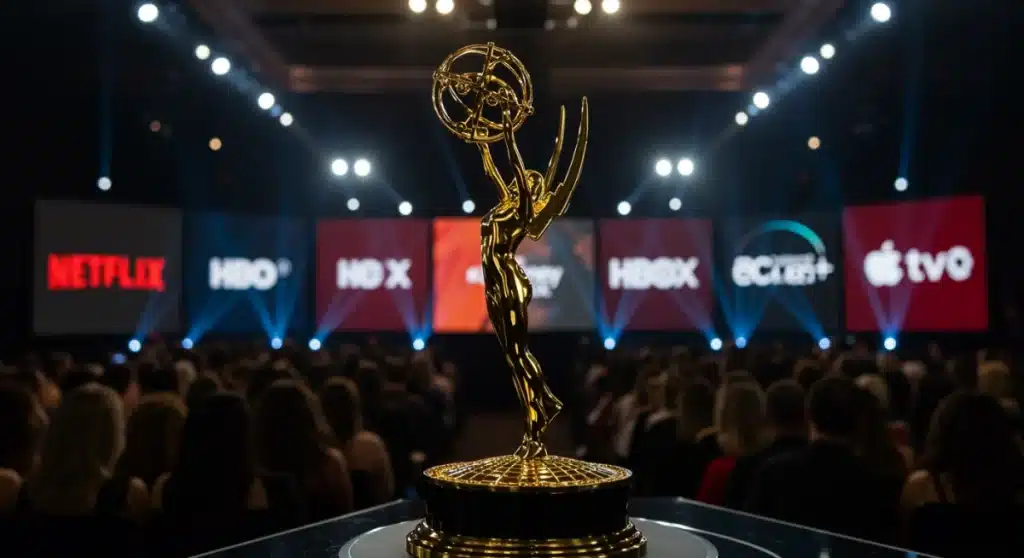
The Emmy Awards 2026 will undoubtedly reflect the continued dominance of streaming services within the Drama Series category, reshaping traditional television landscapes and influencing future content creation and distribution strategies significantly.
As we look towards the Emmy Awards 2026 Predictions, the conversation invariably shifts to the colossal influence of streaming services. The landscape of television has been irrevocably altered, moving from a broadcast-centric model to one where digital platforms reign supreme, especially within the highly competitive Drama Series category. This evolution demands a closer look at how these platforms are not just competing, but actively redefining what constitutes award-worthy content.
The Unstoppable Rise of Streaming in Television
The past decade has witnessed an unprecedented shift in how we consume television, with streaming services emerging as the undisputed titans of content creation and distribution. This paradigm shift has profound implications for prestigious events like the Emmy Awards, particularly for the Drama Series category, which often serves as a benchmark for quality and innovation in television storytelling.
Initially seen as disruptors, platforms such as Netflix, HBO Max, Disney+, and Apple TV+ have evolved into the primary producers of critically acclaimed and audience-engaging drama. Their financial investment in high-quality, diverse, and often boundary-pushing narratives has far outpaced traditional networks, leading to a golden age of television that is intrinsically linked to the streaming model.
Investment in Original Content
Streaming giants have poured billions into creating original series, attracting top-tier talent both in front of and behind the camera. This aggressive investment strategy has resulted in:
- An explosion of diverse storytelling hitherto unseen on linear television.
- The ability to take creative risks with longer, more complex narratives.
- A magnet for renowned showrunners, directors, and actors seeking artistic freedom.
This commitment to original programming has not only enriched the viewing experience but has also positioned these platforms as formidable contenders in every major awards category. The sheer volume and consistent quality of their output make them difficult to ignore during awards season.
Global Reach and Audience Engagement
Beyond content creation, streaming services boast an unparalleled global reach, allowing series to connect with audiences across continents almost instantaneously. This global accessibility translates into:
- Broader cultural impact and influence for their productions.
- Massive subscriber bases that fuel further investment in premium content.
- A diverse viewership that appreciates varied narrative styles and perspectives.
The ability to instantly distribute content worldwide amplifies the buzz around popular shows, creating a global conversation that often propels certain series into the awards spotlight. In essence, the streaming model has democratized access to high-quality drama while simultaneously centralizing its production.
The undeniable ascent of streaming services has fundamentally altered the competitive landscape of television. Their deep pockets, creative freedom, and global distribution networks ensure that they will continue to dominate the discussion and outcomes at the Emmy Awards, particularly within the Drama Series category, for the foreseeable future.
Prediction 1: Continued Dominance in Nominations
My first key prediction for the Emmy Awards 2026 is that streaming services will not only continue but further solidify their dominance in the Drama Series nominations. The sheer volume and consistent quality of their offerings make it increasingly challenging for traditional broadcasters and cable networks to compete for nomination slots.
This isn’t merely about quantity; it’s about the perceived prestige and artistic ambition associated with many streaming originals. Platforms have cultivated a reputation for producing serialized dramas that are cinematic in scope, intricate in plotting, and fearless in their thematic explorations. This creative freedom often translates into critical acclaim, which is a significant factor in Emmy consideration.
The “Must-Watch” Factor
Streaming shows frequently become cultural touchstones, generating widespread discussion and anticipation. This “must-watch” factor:
- Drives subscriber growth and engagement.
- Elevates the show’s profile among Emmy voters.
- Creates a sense of urgency for critics and audiences to engage.
When a show is widely discussed and lauded, it naturally garners more attention during the nomination process. The water-cooler effect, now digital, plays a crucial role in shaping perceptions of excellence.
The Algorithm’s Role in Discovery
While not directly influencing nominations, the sophisticated algorithms employed by streaming services play an indirect role by:
- Surfacing diverse content to specific audience segments.
- Allowing niche dramas to find their dedicated viewership.
- Providing data that informs future content decisions, leading to more tailored, high-quality productions.
This data-driven approach allows platforms to identify trends and invest in stories that resonate, increasing the likelihood of producing Emmy-worthy material. The era of one-size-fits-all programming is over, replaced by a nuanced understanding of audience preferences that streaming services leverage to their advantage.
Therefore, expect to see the nomination lists for Drama Series at the 2026 Emmys heavily populated by titles from Netflix, HBO Max, Apple TV+, and others. Their continuous pipeline of compelling narratives, coupled with strategic marketing and critical buzz, will ensure their overwhelming presence in the nominee pool.
Prediction 2: Shifting Criteria for “Drama” Excellence
My second prediction is that the dominance of streaming services will subtly but significantly shift the informal criteria by which “drama excellence” is judged at the Emmy Awards 2026. Traditional notions of episodic structure and pacing, often dictated by broadcast schedules, are giving way to more expansive and serialized storytelling. This evolution is directly attributable to the binge-watching culture fostered by streaming platforms.
Voters are becoming accustomed to dramas that unfold over many hours, allowing for deeper character development, more intricate plotlines, and a less constrained narrative arc. This change impacts everything from writing to directing and acting, encouraging a more novelistic approach to television series.
The Rise of “Event” Series
Streaming has popularized the “event series” — a limited or ongoing drama designed to be consumed rapidly, often within a few days or weeks. These series often feature:
- High production values akin to feature films.
- Star-studded casts and renowned creative teams.
- Self-contained narratives that feel complete even within a single season.
This format allows for intense, focused storytelling that can leave a lasting impression on viewers and voters alike. The ability to watch a complete story arc without weekly interruptions enhances the overall narrative impact.
Emphasis on Cinematic Quality
With budgets often rivaling those of major motion pictures, streaming dramas increasingly prioritize cinematic aesthetics. This includes:
- Stunning cinematography and visual effects.
- Complex sound design and original scores.
- Location shooting in exotic or visually striking environments.
Emmy voters, many of whom also work in film, are naturally drawn to productions that demonstrate a high degree of technical and artistic polish. The blurring lines between film and television are most evident in these high-budget streaming dramas.
Ultimately, the definition of a “great drama” at the Emmys will continue to lean towards productions that embrace serialization, cinematic ambition, and a willingness to challenge conventional television formats. Streaming services are at the forefront of this evolution, setting new standards for what constitutes award-worthy dramatic storytelling.
Prediction 3: Increased Scrutiny on “Limited Series” vs. “Drama Series” Categories
My third prediction for the Emmy Awards 2026 involves increased scrutiny and potential re-evaluation of the distinction between “Limited Series” and “Drama Series” categories. The lines have become increasingly blurred, largely due to the flexible production models favored by streaming platforms. Many critically acclaimed shows that might traditionally be considered “limited” now have the potential for multiple seasons, or are structured in a way that makes their classification ambiguous.
This ambiguity creates challenges for Emmy voters and potentially dilutes the competitive integrity of both categories. As streaming services continue to experiment with series length and continuation, the Academy of Television Arts & Sciences may need to adapt its definitions to reflect this evolving reality.
The “Anthology” Dilemma
Anthology series, where each season tells a new, self-contained story with a new cast, perfectly exemplify this challenge. While they might feel like a limited series each year, their ongoing nature could technically qualify them for Drama Series. This creates a fascinating conundrum:
- Should a show like The White Lotus, which returns with new characters and settings, compete against ongoing serialized dramas?
- How do voters compare a single, tightly-wound narrative to a multi-season epic?
- Does the distinction inadvertently penalize certain types of storytelling?
The current rules attempt to address this, but streaming’s innovative approaches constantly push the boundaries of these definitions.
The “One-Off” vs. “Ongoing” Ambiguity
The decision to renew a “limited series” for additional seasons after initial success further complicates matters. What begins as a self-contained narrative can, due to popular demand or critical acclaim, evolve into an ongoing drama. This retroactive re-classification can be contentious and confusing for all involved.
For the Emmy Awards 2026, I anticipate that this issue will become even more pronounced. The Academy may need to implement clearer guidelines, perhaps based on initial production intent or a stricter adherence to a one-season-only rule for Limited Series, to maintain the distinctiveness and fairness of both categories. The increasing fluidity of content creation on streaming platforms demands a more adaptive awards framework.
The Impact on Traditional Broadcast and Cable Networks
The ascendance of streaming services has not only reshaped the competitive landscape for the Emmy Awards but has also profoundly impacted traditional broadcast and cable networks. These legacy players are now forced to innovate rapidly, redefine their strategies, and often collaborate with or emulate their streaming counterparts to remain relevant in the prestige drama space.
For many years, networks like HBO, AMC, and Showtime were synonymous with groundbreaking drama. While they still produce exceptional content, the sheer volume and aggressive investment from streamers mean they are now playing catch-up in many respects, particularly when it comes to capturing Emmy attention in the Drama Series category.
Strategic Responses and Adaptations
Traditional networks are responding to this challenge in several ways:
- Focus on Niche Audiences: Some are honing in on specific demographics or genres where they can still excel.
- Shorter Seasons: Adopting a more “streaming-like” model with fewer, more tightly produced episodes per season.
- Hybrid Models: Launching their own streaming platforms (e.g., Paramount+, Peacock) or making their content available on existing ones.
These adaptations are crucial for survival in a fragmented media environment where viewers have an overwhelming array of choices.
The Enduring Power of Live Events and News
While scripted drama has largely migrated to streaming, traditional networks retain a significant advantage in live programming, including news, sports, and award shows themselves. This provides a unique value proposition that streaming services, despite their growth, cannot fully replicate.
However, the prestige associated with Emmy-winning dramas often boosts a network’s overall brand. Losing ground in this area can have long-term implications for their perceived quality and ability to attract top creative talent. The battle for the Drama Series Emmy is not just about a trophy; it’s about cultural relevance and industry standing.
In conclusion, traditional networks face an uphill battle against streaming behemoths in the Drama Series category. Their future success at the Emmys will likely depend on their ability to create highly distinctive, critically acclaimed content that can cut through the noise, or by successfully integrating their offerings within the streaming ecosystem, effectively becoming “streamers” themselves.
The Evolving Role of the Emmy Voter in a Streaming World
The shift towards streaming dominance profoundly impacts the role and responsibilities of the Emmy voter. In an era where hundreds of original dramas are released annually across numerous platforms, the task of evaluating and selecting the best has become exponentially more complex. Voters are no longer just watching a handful of network shows; they are navigating a vast and diverse ocean of content.
This increased volume necessitates a more strategic approach to viewing and judging, and it often highlights the inherent biases or viewing habits of the voting body. The sheer amount of content means that voters must be highly selective, and often rely on critical consensus, industry buzz, or even personal platform subscriptions to guide their choices.
Challenges for Voters
The challenges faced by Emmy voters are considerable:
- Content Overload: The sheer number of eligible drama series makes it impossible to watch everything.
- Discovery Issues: Niche but excellent shows on smaller platforms might be overlooked.
- Time Constraints: Voters often have full-time jobs in the industry, limiting their viewing time.
These factors can lead to certain popular or heavily marketed shows gaining an advantage, regardless of their intrinsic quality compared to lesser-known contenders.
The Influence of “For Your Consideration” Campaigns
The “For Your Consideration” (FYC) campaigns, already a significant part of awards season, have become even more crucial in the streaming era. Platforms invest heavily in these campaigns to ensure their shows cut through the noise. This includes:
- Lavish screening events and Q&As with cast and crew.
- Sending physical and digital screeners to voters.
- Extensive advertising in industry publications and online.
While ideally, quality should be the sole determinant, effective FYC campaigns undoubtedly influence voter awareness and engagement, potentially swaying nominations and wins. This makes the competition not just about the art, but also about the marketing muscle behind it.
The Emmy voter’s role is evolving into one that requires both diligent curation and a reliance on industry signals. As streaming continues to expand the television universe, the Academy may need to consider new mechanisms to ensure that all deserving dramas, regardless of their platform or marketing budget, have a fair chance at recognition.
Future Outlook: Innovation and Interoperability
Looking ahead to the Emmy Awards 2026 and beyond, the future of drama series on streaming platforms will likely be characterized by continued innovation and an increasing focus on interoperability. The industry is constantly evolving, and what constitutes a “streaming service” today might look very different in a few years. This dynamic environment will continue to shape the awards landscape.
We can anticipate bolder creative choices, new technological integrations, and perhaps even a consolidation of platforms or the emergence of new partnership models that blur the lines between traditional and digital distribution even further. The drive for subscriber retention and engagement will fuel this ongoing evolution.
New Content Forms and Technologies
Innovation will not be limited to storytelling alone. Expect streaming dramas to increasingly leverage:
- Interactive Elements: Allowing viewers to make choices that influence the narrative (though likely limited for Emmy-eligible drama).
- Enhanced Visuals: Further advancements in CGI, virtual production, and high-resolution formats.
- Personalized Experiences: While not directly tied to awards, personalized content delivery will continue to refine audience engagement.
These technological advancements will offer new avenues for dramatic expression, potentially creating new categories or sub-categories for the Emmys in the distant future.
The Blurring of Platform Boundaries
The concept of exclusive content might also evolve. We could see more collaborations between platforms, or even content being licensed across different services, creating a more interconnected ecosystem. This interoperability could:
- Increase accessibility for viewers.
- Broaden the reach of award-worthy content.
- Challenge the notion of strict platform loyalty.
Such a shift would further complicate the Emmy voting process, as voters might encounter the same series on multiple “channels” or services, making the specific platform less relevant than the quality of the show itself.
The future outlook for Emmy-contending drama series is one of relentless change and creative expansion. Streaming services will remain at the vanguard, pushing boundaries both artistically and technologically. The Emmy Awards 2026 will be a snapshot of this ongoing transformation, celebrating the best of a dynamic and increasingly digital television landscape.
| Key Aspect | Impact on Emmys 2026 Drama Series |
|---|---|
| Streaming Dominance | Overwhelming majority of nominations from streaming platforms due to investment and volume. |
| Shifting Criteria | Emphasis on cinematic quality, serialized storytelling, and “event” series over traditional episodic structures. |
| Category Scrutiny | Increased debate and potential re-evaluation of “Limited Series” vs. “Drama Series” definitions. |
| Traditional Networks | Forced to innovate, focus on niche, or adopt hybrid streaming models to compete. |
Frequently Asked Questions about Emmys 2026 and Streaming
While challenging, it’s not impossible. Traditional networks might secure wins with highly distinctive, critically acclaimed dramas that cut through the streaming noise. However, their victories will likely be fewer and further between, often requiring exceptional creative output to compete with the sheer volume and investment from streaming giants.
Streaming services encourage a shift towards serialized, cinematic storytelling with deeper character arcs and less adherence to traditional episodic structures. Voters increasingly appreciate “event” series with high production values, pushing the definition of “drama excellence” to align more with a film-like approach to television.
The primary challenge for Emmy voters is content overload. With hundreds of eligible drama series released annually, it’s impossible to watch everything. This necessitates reliance on critical consensus, industry buzz, and “For Your Consideration” campaigns, potentially overlooking excellent but less-marketed productions.
While no new categories are immediately expected for 2026, the increasing innovation in streaming content, such as interactive elements or new formats, might eventually necessitate new or refined categories. The Academy constantly adapts, and future technological advancements could certainly drive such changes.
Global reach amplifies cultural impact and buzz around streaming dramas. When a show becomes a worldwide phenomenon, it gains significant visibility and prestige, making it more likely to capture the attention of Emmy voters. This broad engagement often translates into a stronger position during awards season.
Conclusion
The Emmy Awards 2026 will serve as a definitive testament to the enduring and escalating dominance of streaming services within the Drama Series category. Our predictions highlight not just their continued presence in nominations, but also their profound influence on the very definition of television excellence and the structural challenges facing the awards themselves. As these platforms continue to innovate, invest, and expand their global footprint, they will undoubtedly remain the primary drivers of prestige drama, compelling both traditional networks and the Television Academy to adapt to an ever-evolving media landscape.