Understanding Unemployment Benefits in 2026: Eligibility, Duration, and Amounts

Advertisements
Latest developments on Unemployment Benefits 2026, with key facts, verified sources and what readers need to monitor next in the United States, presented clearly in English (United States).
Understanding Unemployment Benefits in 2026: Eligibility, Duration, and Weekly Amounts is shaping today’s agenda with new details released by officials and industry sources. This update prioritizes what changed, why it matters and what to watch next, in a straightforward news format.
Understanding Unemployment Benefits in 2026: The Evolving Landscape
The landscape of unemployment benefits is continually evolving, with significant changes anticipated for 2026 that could impact millions of Americans. Federal and state agencies are currently refining policies, aiming to strike a balance between supporting those out of work and ensuring fiscal responsibility.
These adjustments reflect lessons learned from recent economic shifts and aim to create a more resilient and equitable system. Staying informed about these potential changes is crucial for anyone who might need to rely on these benefits in the future.
Our comprehensive guide delves into the specifics of Unemployment Benefits 2026, providing clear, actionable information on what to expect. We analyze the proposed modifications and their potential implications for workers and the economy.
Eligibility Criteria for Unemployment Benefits in 2026
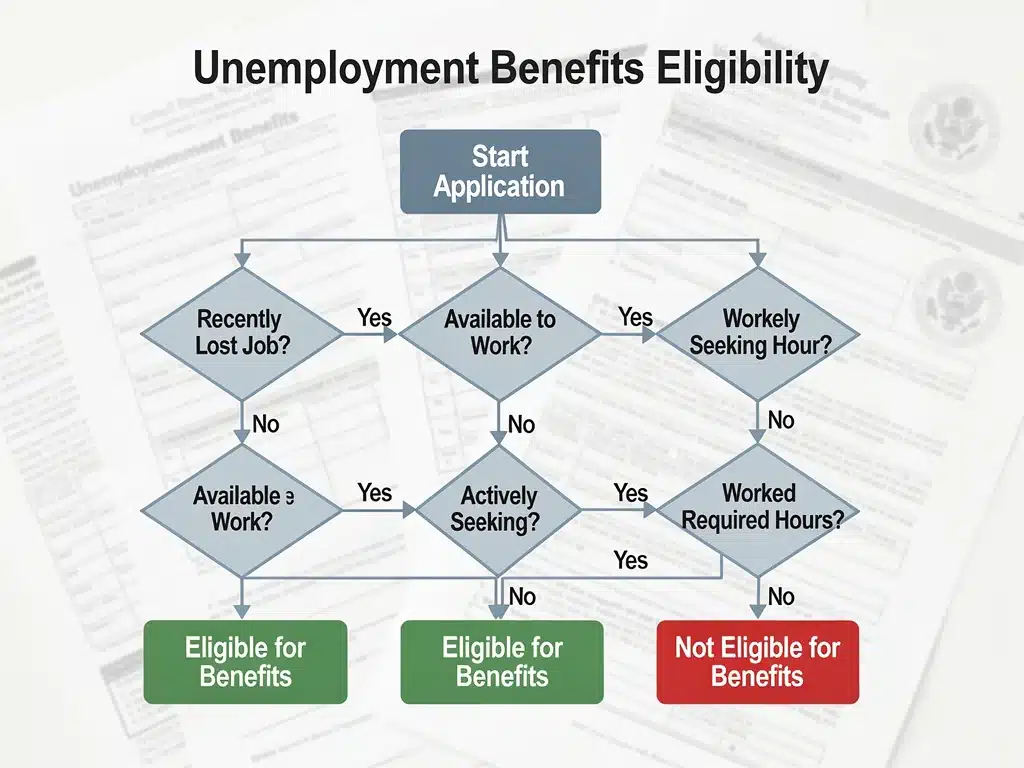
Eligibility for unemployment benefits typically hinges on several key factors, primarily an individual’s work history and the circumstances surrounding their job separation. In 2026, states are expected to maintain core requirements while potentially introducing new nuances to these criteria.
Claimants generally need to have earned a certain amount in wages during a base period, demonstrating a consistent attachment to the workforce. The reason for unemployment is also critical; voluntary separation without good cause or termination due to misconduct often disqualifies applicants.
Furthermore, individuals must be actively seeking new employment and be available for work. These requirements ensure that benefits are directed toward those genuinely in need and committed to re-entering the workforce.
Standard Eligibility Requirements
- Work History: Must have worked a minimum number of hours or earned a certain amount of wages within a specified base period.
- Job Separation: Unemployment must be through no fault of your own, such as layoffs or business closures.
- Availability for Work: Must be physically able and available to accept suitable employment.
- Job Search: Actively seeking work, often requiring documentation of job search efforts.
Potential New Criteria and State Variations
While federal guidelines provide a framework, individual states have considerable autonomy in setting their specific eligibility criteria. For 2026, some states might introduce enhanced work search requirements, potentially mandating a greater number of employer contacts or participation in job training programs.
There could also be adjustments to the definition of ‘suitable work,’ reflecting changes in the labor market. These state-specific variations underscore the importance of consulting your local unemployment agency’s regulations when preparing to apply for benefits.
Understanding these state-level differences is crucial, as what qualifies in one state might not in another. Applicants should review their state’s unemployment insurance handbook thoroughly.
Duration of Unemployment Benefits: What to Expect in 2026
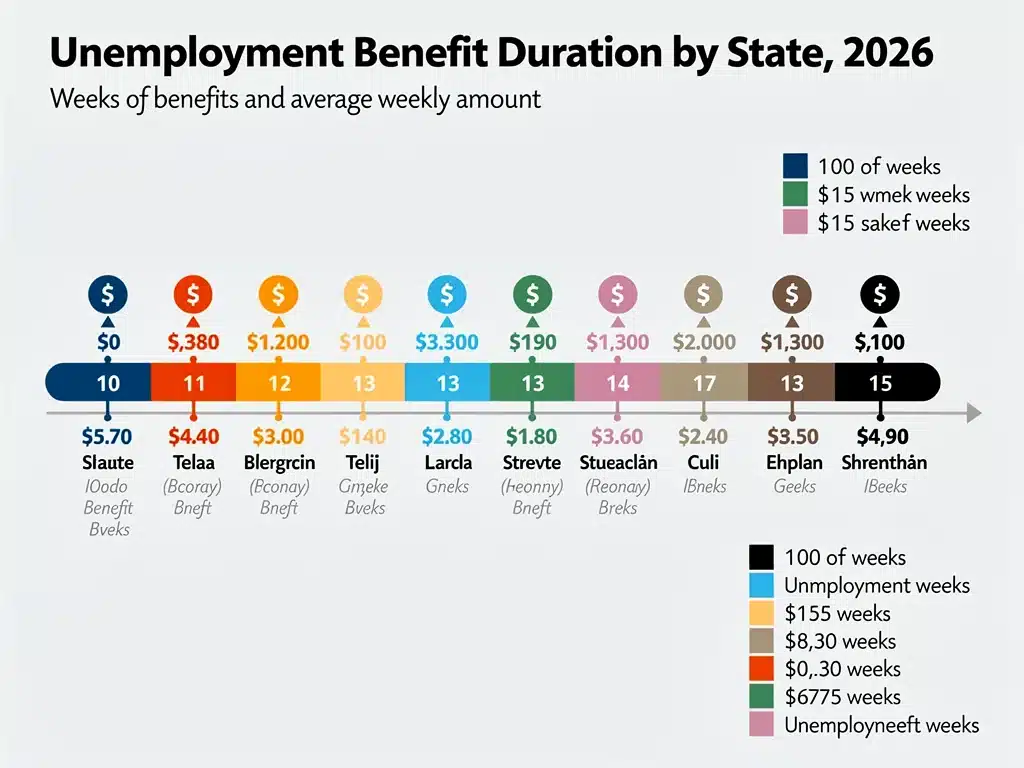
The duration of unemployment benefits is a critical concern for those relying on this support, and in 2026, the standard periods are expected to largely remain consistent with pre-pandemic norms. Most states provide benefits for a maximum of 26 weeks, though this can vary significantly.
Some states offer shorter durations, while others, often those with higher unemployment rates or specific economic conditions, might provide extended periods. Federal programs, when enacted, can also temporarily lengthen these terms during severe economic downturns, but no such programs are currently slated for 2026.
Claimants should be aware that the actual length of time they receive benefits depends on their individual earnings during the base period. The maximum duration is rarely a guaranteed period for all applicants.
Standard and Extended Benefit Periods
The standard duration for unemployment benefits across most states is up to 26 weeks. This period is designed to provide temporary financial relief while individuals actively search for new employment opportunities.
However, several states operate with shorter maximum durations, some as low as 12 to 20 weeks, depending on their state statutes and economic indicators. It is vital for potential claimants to verify the specific maximum duration applicable in their state for 2026.
Extended benefits, often triggered by high state unemployment rates, are a federal-state program that can provide additional weeks of aid. While not automatically active, monitoring economic conditions will be key to understanding if these programs become available in 2026.
Factors Influencing Benefit Duration
The precise number of weeks an individual can receive benefits is often determined by their past earnings and the state’s benefit formula. States calculate a claimant’s total potential benefit amount, which is then divided by their weekly benefit amount to determine duration.
This means that individuals with higher earnings during their base period may qualify for the maximum number of weeks, assuming all other eligibility criteria are met. Conversely, those with lower earnings might exhaust their benefits more quickly.
Additionally, state-specific policies regarding disqualifications or appeals can impact the effective duration of benefits. Understanding these calculation methods is crucial for accurately forecasting financial support.
Weekly Benefit Amounts in 2026: State-by-State Breakdown
The weekly benefit amount for unemployment insurance varies significantly from state to state, reflecting different economic conditions and cost-of-living considerations. In 2026, these amounts will continue to be determined by a formula that typically takes into account a claimant’s earnings during a specific base period.
Most states calculate the weekly benefit as a fraction of a claimant’s average weekly wage during their highest-earning quarter. However, all states impose a maximum weekly benefit amount, meaning even high earners will not receive their full previous wage.
These maximums are subject to annual review and potential adjustment, making it essential to consult official state resources for the most current figures for Unemployment Benefits 2026. Understanding these state-specific maximums is crucial for financial planning.
Calculating Your Weekly Benefit
To estimate your potential weekly benefit, you’ll generally need to look at your earnings over the past 12 to 18 months, depending on your state’s base period definition. Most states use a formula that provides roughly 40-50% of your average weekly wage, up to the state’s maximum.
For instance, if your state’s formula provides 50% of your average weekly wage and the maximum is $500, an individual earning $1,200 per week might receive $500, not $600. Some states also incorporate dependents into their calculations, potentially increasing the weekly amount.
It is important to remember that these are gross amounts; federal and state taxes may be withheld from your unemployment benefits, reducing the net amount received. Financial planning should account for these deductions.
State Maximums and Minimums
The range of weekly benefit amounts across the U.S. is substantial. In 2026, some states might offer maximums exceeding $800 per week, while others could have maximums closer to $300-$400. Minimum weekly benefits also exist, ensuring a baseline level of support for low-wage earners.
These maximums and minimums are typically adjusted annually to reflect inflation and changes in the state’s average wage. It is advisable to check your state’s Department of Labor or equivalent agency website for the precise figures applicable to Unemployment Benefits 2026.
These variations highlight the importance of state-specific research when considering unemployment benefits. Relying on general figures could lead to inaccurate expectations regarding financial support.
Application Process and Required Documentation for 2026
Navigating the application process for unemployment benefits can be complex, requiring careful attention to detail and timely submission of necessary documents. For 2026, the fundamental steps are expected to remain consistent, primarily involving online applications through state unemployment agencies.
Applicants will typically need to provide personal identification, detailed work history, and earnings information. This includes previous employers’ names, addresses, and dates of employment, as well as reasons for separation from each job.
Gathering all required documentation before starting the application can significantly streamline the process and prevent delays. Incomplete applications are a common reason for processing holdups.
Key Steps in the Application Process
The first step is usually to file a claim online through your state’s unemployment insurance website. This initial application will gather basic personal and employment information, initiating the review process.
Following the initial claim, you will likely be required to complete weekly certifications, attesting to your continued unemployment, availability for work, and job search efforts. Failing to submit these weekly certifications will result in a halt in benefits.
Be prepared for potential interviews or requests for additional information from the unemployment agency. Responding promptly and accurately to these requests is crucial for a smooth application and approval process for Unemployment Benefits 2026.
Essential Documents and Information
- Personal Identification: Social Security Number, driver’s license or state ID.
- Work History: Names, addresses, and phone numbers of all employers for the past 18-24 months.
- Earnings Information: Pay stubs, W-2 forms, or other proof of wages.
- Reason for Separation: Detailed explanation for why you are no longer employed.
Taxation of Unemployment Benefits in 2026
It is a common misconception that unemployment benefits are not taxable income, but this is incorrect; these benefits are generally considered taxable at the federal level. For 2026, claimants should anticipate that their weekly payments will be subject to federal income tax.
Many states also tax unemployment benefits, though a few states do not. This means the net amount received can be considerably less than the gross weekly benefit, a crucial factor for financial planning.
Claimants have the option to have federal income tax withheld from their unemployment payments, which can help avoid a large tax bill at the end of the year. Understanding these tax implications is vital for managing finances effectively.
Federal and State Tax Implications
At the federal level, unemployment benefits are fully taxable. The Internal Revenue Service (IRS) requires these benefits to be reported as income on your tax return. Failure to do so can lead to penalties and interest.
States vary in their taxation of unemployment benefits. Some states, like California and New Jersey, do not tax these benefits, while others, such as New York and Pennsylvania, do. Claimants should consult their state’s tax department for specific guidance.
It is strongly recommended to opt for tax withholding from your benefits if possible. This proactive step can prevent unexpected tax liabilities when filing your annual income tax return.
Reporting and Withholding Options
When you apply for unemployment benefits, you will typically be given the option to have federal income tax withheld from your payments. This is usually done at a flat rate of 10%.
If you do not choose to have taxes withheld, you will be responsible for paying estimated taxes quarterly to the IRS. Forgetting to do so could result in underpayment penalties.
At the end of the tax year, you will receive Form 1099-G from your state unemployment agency, detailing the total amount of unemployment benefits received. This form is essential for accurately filing your federal and state income tax returns for Unemployment Benefits 2026.
Appealing a Denied Unemployment Claim in 2026
Receiving a denial for unemployment benefits can be disheartening, but it is not necessarily the final word. Claimants have the right to appeal a denied decision, and understanding this process is crucial for those who believe their claim was unjustly rejected. In 2026, the appeals procedures are expected to largely follow established legal frameworks.
The appeal process typically begins with filing a formal request for reconsideration within a strict timeframe, usually within 10 to 30 days of the denial notification. Missing this deadline can permanently forfeit your right to appeal.
It is essential to gather all relevant documentation and evidence to support your appeal. This might include employment contracts, termination letters, pay stubs, and any communication with your former employer.
The Appeals Process Overview
Once an appeal is filed, a hearing will typically be scheduled, often before an administrative law judge or an appeals referee. This hearing provides an opportunity for both the claimant and the former employer to present their case and offer evidence.
Claimants should prepare thoroughly for this hearing, organizing their documents and practicing their testimony. Understanding the specific reasons for the initial denial is key to effectively addressing the issues raised by the unemployment agency.
If the initial appeal is unsuccessful, further levels of appeal, such as review by a state appeal board or even state courts, may be available. The process can be lengthy, but persistence can pay off for valid claims.
Tips for a Successful Appeal
- Act Quickly: Adhere strictly to appeal deadlines to avoid forfeiture.
- Gather Evidence: Collect all documents supporting your claim, such as termination letters, emails, and witness statements.
- Understand the Denial: Clearly identify the reasons for the initial denial to address them directly.
- Prepare Your Case: Organize your arguments and evidence logically for presentation at the hearing.
Resources and Support for Unemployment Claimants in 2026
Navigating unemployment can be a challenging period, and fortunately, numerous resources and support systems are available to assist claimants beyond just financial benefits. For 2026, state and federal agencies, alongside non-profit organizations, will continue to offer a range of services designed to help individuals get back on their feet.
These resources often include job search assistance, resume writing workshops, interview coaching, and access to job boards. Many states also provide re-employment services that can help bridge skill gaps or facilitate career transitions.
Leveraging these support systems can significantly improve job search outcomes and reduce the duration of unemployment. Being proactive in seeking out and utilizing these resources is highly recommended for all claimants.
State and Federal Re-employment Services
State workforce agencies are primary hubs for re-employment services. They often offer free access to career counselors who can provide personalized guidance, assess skills, and help develop effective job search strategies.
Many of these agencies also host job fairs, connect job seekers with local employers, and provide access to online tools and databases. These services are invaluable for individuals seeking to quickly re-enter the workforce.
Federal programs, often administered through state agencies, can also provide funding for training or education in high-demand fields. Inquiring about these opportunities can open new career paths while receiving Unemployment Benefits 2026.
Community and Non-Profit Support
- Career Counseling: Many non-profits offer free or low-cost career guidance, resume reviews, and interview preparation.
- Financial Literacy: Organizations provide workshops on budgeting, debt management, and financial planning during unemployment.
- Mental Health Support: Unemployment can be stressful; community centers and non-profits often offer counseling and support groups.
- Legal Aid: For complex cases or appeals, legal aid societies can provide assistance or referrals to pro bono attorneys.
| Key Aspect | Brief Description |
|---|---|
| Eligibility | Requires work history, job separation through no fault, and active job search. |
| Duration | Typically 26 weeks maximum, varying by state and past earnings. |
| Weekly Amounts | Calculated based on past wages, subject to state maximums; taxable. |
| Application Process | Online submission requires detailed personal and employment documentation. |
Frequently Asked Questions About Unemployment Benefits in 2026
To qualify for Unemployment Benefits in 2026, individuals generally must have a sufficient work history with qualifying wages, be unemployed through no fault of their own, and be actively seeking and available for new employment. Specific state variations apply, requiring careful review of local guidelines.
The standard duration for Unemployment Benefits in 2026 is up to 26 weeks in most states, though this can range from 12 to 20 weeks in others. The exact length depends on individual earnings during the base period and state-specific regulations.
Yes, Unemployment Benefits in 2026 are taxable at the federal level, and in most states. Claimants can opt for tax withholding from their payments to avoid a large tax bill, or they must pay estimated taxes quarterly to the IRS.
When applying for Unemployment Benefits in 2026, you will need your Social Security Number, state ID, detailed work history (employer names, addresses, dates), earnings information (pay stubs, W-2s), and a clear explanation for your job separation.
If your Unemployment Benefits claim is denied, you have the right to appeal. File a formal request for reconsideration within your state’s strict deadline, gather all supporting evidence, and prepare for a hearing to present your case effectively.
Looking Ahead: Navigating Unemployment Benefits in 2026
The information surrounding Unemployment Benefits 2026 underscores the dynamic nature of economic support systems. Staying informed about eligibility changes, duration limits, and weekly amounts is paramount for individuals and families. Continuous monitoring of state and federal updates will be key to understanding personal implications.
As the economic landscape evolves, policies related to unemployment benefits will likely adapt to new challenges and opportunities. Proactive engagement with available resources and a clear understanding of the application and appeal processes will empower claimants.
Ultimately, a well-informed approach to Unemployment Benefits 2026 will ensure that those in need can access the support designed to help them through periods of joblessness. Being prepared for potential adjustments is the best strategy moving forward.